
October 9, 2026
In 2006, My Chemical Romance did something that could have easily gone horribly wrong.
They made a rock album about death.
Not just death as a metaphor. Not just heartbreak dressed up in black clothing. They created an entire world surrounding a dying man, filled it with marching bands, ghosts, war, cancer, regret, childhood memories, revenge, romance and the possibility of redemption—and then released it to millions of teenagers who were already being told that My Chemical Romance was "too dramatic."
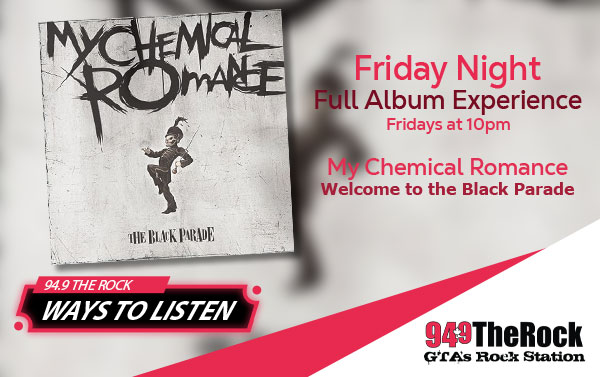
The result was The Black Parade.
And somehow, against all odds, it worked.
More than worked, actually. It became one of the defining albums of the 2000s.
Welcome to the Parade
By the time My Chemical Romance entered the studio to follow up 2004's Three Cheers for Sweet Revenge, they had already established themselves as one of the most recognizable bands in the post-hardcore and emo explosion.
But Gerard Way and company weren't interested in simply making Three Cheers Part II.
Instead, they created a fictional alter ego: The Black Parade.
The band would essentially become characters within their own story. Their appearance changed. Their sound expanded. The songs became more theatrical. The guitars were still loud, but suddenly there were orchestras, choirs, piano, horns and enormous vocal arrangements.
It was less like making another punk record and more like building a stage production.
And at the center of it all was The Patient—a man confronting his final moments and reflecting on the life he had lived.
The album begins with a question.
"When I was a young boy..."
And then the parade arrives.
Death Comes With a Parade
The brilliance of The Black Parade is that death isn't presented as a single emotion.
It's frightening.
It's sad.
It's angry.
It's occasionally funny.
And sometimes, strangely, it's beautiful.
The Patient's journey takes him through memories and hallucinations, confronting his relationships and the choices he made along the way.
"Welcome to the Black Parade" became the obvious centerpiece, but the album's ambition is much larger than its biggest single.
"The End." sounds like the opening curtain.
"Dead!" turns mortality into a sarcastic carnival.
"This Is How I Disappear" feels like the realization that you're leaving the world behind.
"The Sharpest Lives" is reckless and dangerous.
"I Don't Love You" strips away much of the theatricality and delivers something painfully human.
And then there is "Cancer."
Just a piano, a voice and devastatingly simple lyrics.
It is arguably one of the most emotionally effective moments on the entire record because the band doesn't need to hide behind the spectacle.
Sometimes the quietest moment is the loudest one.
"Teenagers" Was the Bait
Then came "Teenagers."
On an album dealing with death, war and existential despair, My Chemical Romance somehow found time to write one of the catchiest songs of the decade.
It also became one of the band's most recognizable songs.
But beneath the ridiculously memorable chorus was something much more interesting: a song about fear.
Adults fear teenagers.
Teenagers fear adults.
Everybody assumes everybody else is dangerous.
And MCR turned that tension into a glam-rock-infused anthem that sounded almost like it had escaped from an entirely different album.
It was a reminder that The Black Parade wasn't supposed to be relentlessly miserable.
The darkness was often accompanied by humour, exaggeration and theatricality.
The Album's Secret Weapon: Hope
Perhaps the most important thing about The Black Parade is that it isn't really an album about dying.
It's an album about living.
The Patient spends the record looking backward because he's running out of time.
That's what gives the album its emotional weight.
What did I do?
Who did I love?
Who loved me?
What will people remember?
Was I brave?
Was I afraid?
Did my life actually mean something?
Those questions aren't exclusive to a fictional character dying in a rock opera. They're questions that eventually confront everybody.
And that's why the album connected so deeply with an audience that was, in many cases, nowhere near death.
Teenagers weren't listening to The Black Parade because they were dying.
They were listening because they were trying to figure out how to live.
My Chemical Romance Became The Black Parade
There was another fascinating element to the record: the band didn't simply write The Black Parade.
For a period, they became it.
The uniforms.
The black-and-white imagery.
The marching-band aesthetic.
The fictional history.
The elaborate stage production.
Gerard Way's transformation into the flamboyant, almost otherworldly frontman of the Parade.
It was an enormous gamble.
A band that had already found success was deliberately making itself stranger.
And instead of distancing their audience, it